
Search Hawaii Traffic Court Records
Hawaii traffic court records are public documents maintained by the Hawaii State Judiciary through a unified court system that spans four judicial circuits. Whether you need to look up the status of a traffic case, check a citation, or get a certified traffic abstract, the state gives you several ways to access that information. The primary online tool is eCourt Kokua, a free search portal available 24 hours a day. You can search by name, case number, or citation number and pull basic case details for traffic matters filed in District Courts across all islands. This guide covers what records exist, how to search them, and what it costs to get official copies.
Hawaii Traffic Court Records at a Glance
How to Find Hawaii Traffic Court Records Online
The Hawaii State Judiciary provides eCourt Kokua as the central online tool for accessing traffic court records. It covers cases filed in all District Courts across the state, along with Circuit Court criminal cases, Family Court cases, and appellate matters. The system runs around the clock. You do not need to create an account or pay anything to search basic case information. Visit the Hawaii Judiciary court records search page to get started. From there you can search traffic cases by party name, case number, or citation number. Results show case status, hearing dates, financial assessments, and docket entries.
If you need copies of actual court documents rather than just case summary data, those cost money. Individual documents are available for $3.00 per document or 10 cents per page, whichever comes out to more. Certified copies carry an extra charge of $2.00 per document. The Technical Support helpline for eCourt Kokua is (808) 538-5333. Keep in mind that what you see online is not an official record. It is a public service provided by the judiciary. The data shown reflects what has been entered into the system, though there can be a gap between when a ticket is issued and when it shows up online, sometimes as long as 13 days or more.
eCourt Kokua also includes a vehicle search option and an upcoming hearings search. These are useful when you know a plate number but not the full case details.
The official Hawaii Judiciary search court records page shows the full range of case types available through the portal, including traffic, criminal, civil, and appellate matters filed statewide.
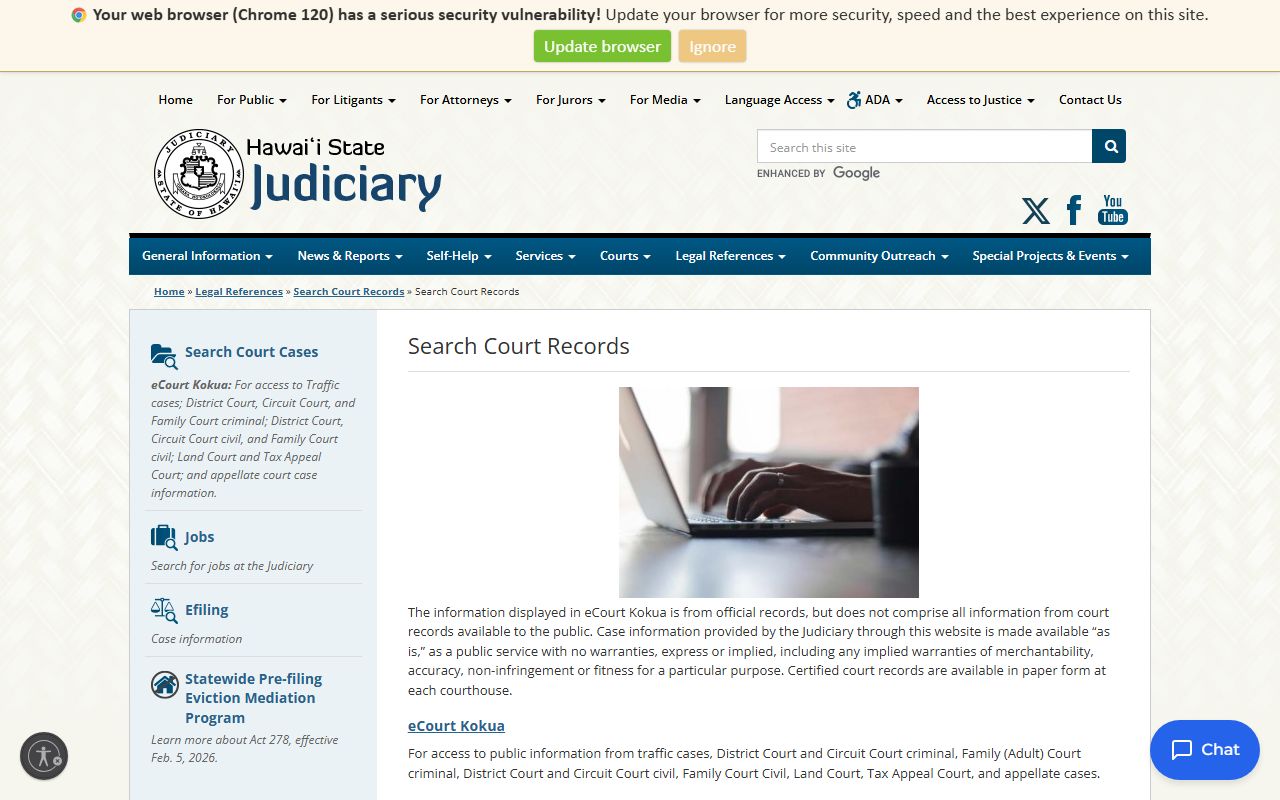
The portal is the starting point for any online lookup of Hawaii traffic court records and is updated as case actions occur.
The View Traffic Case Records page on the judiciary website clarifies what eCourt Kokua displays and explains why it cannot replace a certified traffic abstract for official use.
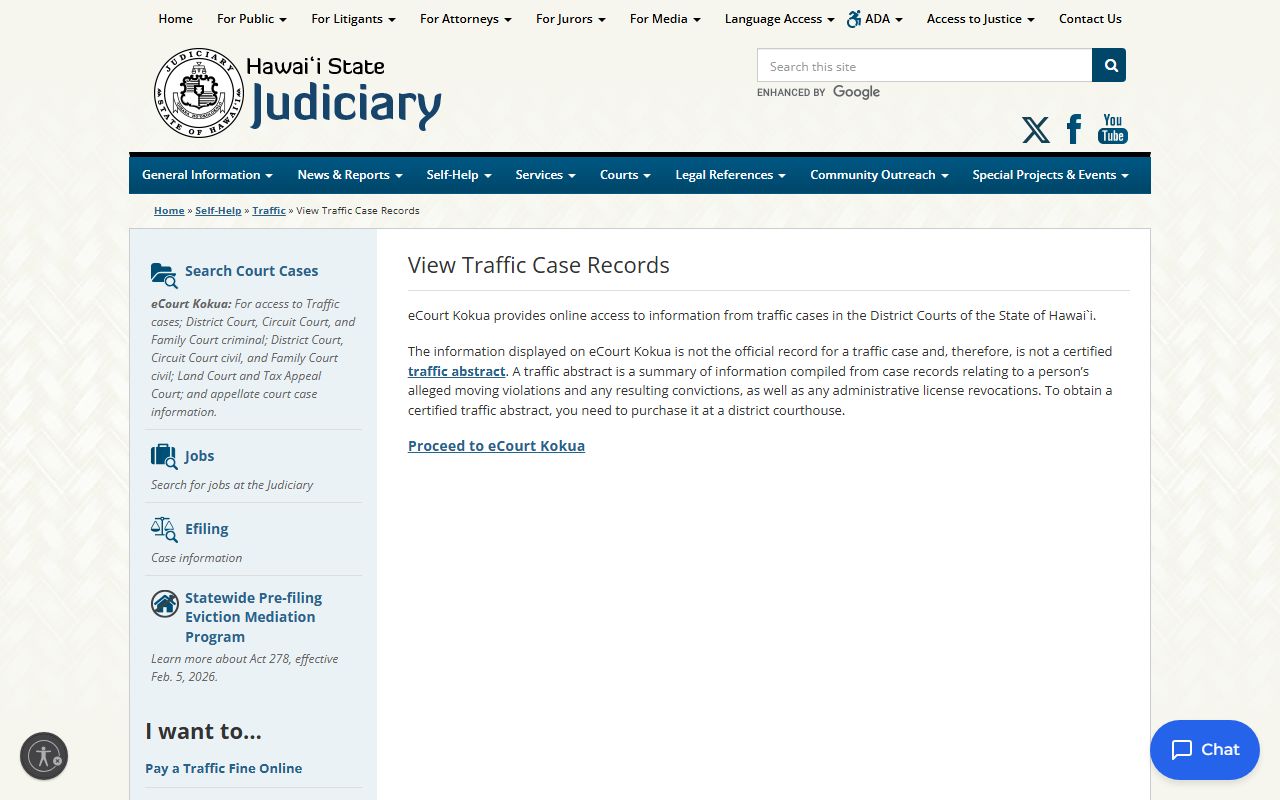
It also explains how to use the different search options and what to do when a name search returns multiple results.
Types of Hawaii Traffic Violations
Traffic offenses in Hawaii fall into two broad groups: civil infractions and traffic crimes. Civil infractions are by far the most common. These are cases where the law does not allow a jail sentence. Speeding, running a red light, not wearing a seat belt, and having an expired safety check sticker are all civil infractions. They are handled under Hawaii Revised Statutes Chapter 291D, a chapter the legislature created specifically to process traffic infractions faster and with less court time than traditional criminal proceedings. The chapter divides infractions into three groups: moving, parking, and equipment violations.
Traffic crimes are different from infractions. A traffic crime is a violation where a jail sentence is possible as a penalty. Driving under the influence, driving without a license, driving without no-fault insurance after a first offense, reckless driving, and excessive speeding are examples. If you are charged with a traffic crime, you must show up in court. There is no option to just pay and move on. A prosecutor will be present, and a state witness may appear. If found guilty, the judge issues a sentence. Failing to appear when required results in a bench warrant being issued. Traffic crimes can affect your criminal record, unlike civil infractions. The Hawaii Judiciary's types of traffic offenses page lays out this distinction clearly.
Within civil infractions, moving violations carry the most weight because they appear on your traffic abstract under HRS Section 287-3. Parking and equipment violations generally do not appear on the standard abstract.
The Hawaii Judiciary's types of traffic violations page breaks down the classification system and explains what penalties apply to each category, including fines, community service, and mandatory driver education.
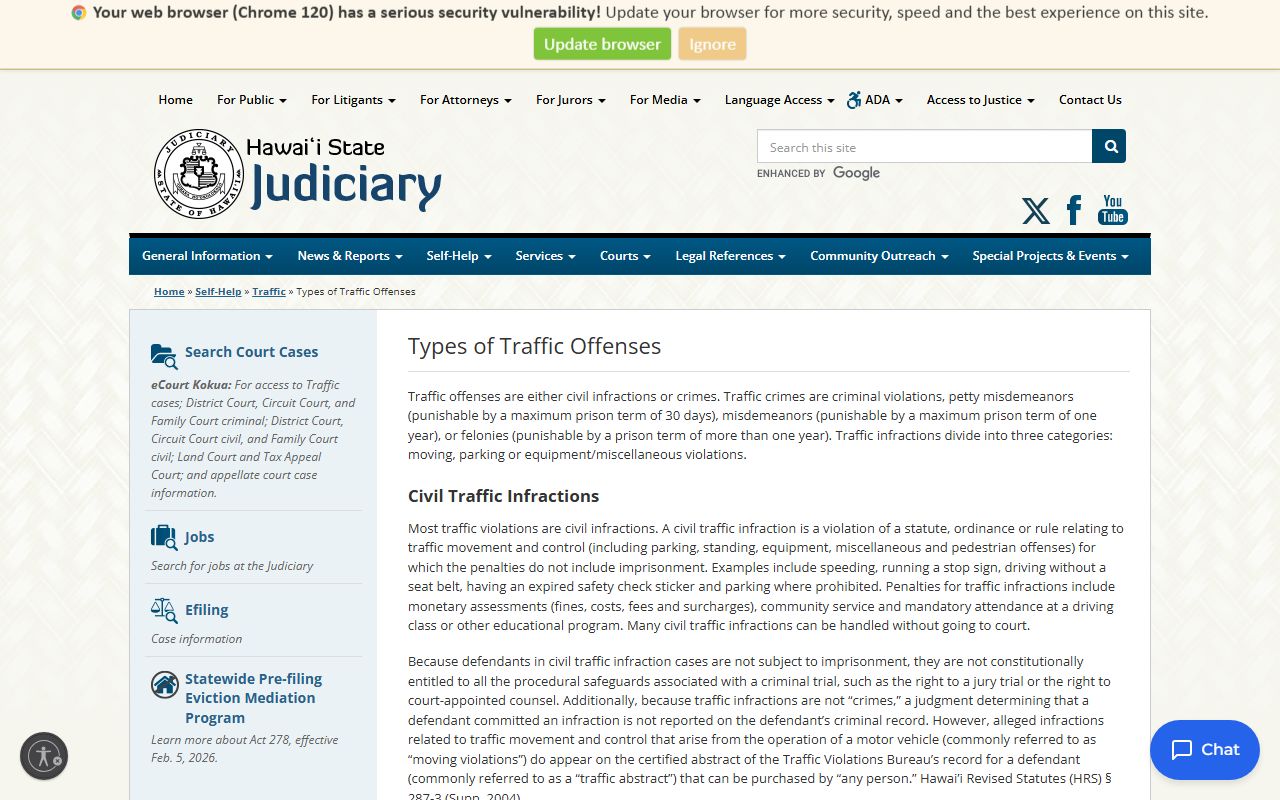
Understanding the type of violation you are dealing with helps you decide the right next step, whether that is paying online or preparing for a court appearance.
Hawaii Traffic Abstracts and Court Reports
Hawaii courts issue two types of certified documents that summarize a person's traffic history. The first is the traffic abstract. This is the standard version and the one most people need. It shows all alleged moving violations and any resulting convictions, plus any administrative license revocations. The fee is $20 per abstract. You can get one in person at any District Court or by mail. For mail requests, include a self-addressed stamped envelope along with a money order or cashier's check for $20 made out to "District Court." Personal checks are not accepted. You must provide your full name, date of birth, and driver license number. If only a name is given and multiple records exist, you may need to purchase all of them.
The second document is the traffic court report, sometimes called a complete abstract. It includes parking and equipment citations in addition to everything in the standard abstract. This version costs $1.00 for the first page and 50 cents for each additional page. Unlike the standard abstract, the traffic court report is only available in person at a District Court. You must show a valid photo ID. You cannot request it by mail. HRS Section 287-3 governs both types of records. Courts must keep moving violation data for at least ten years for state purposes. Federal commercial driver's license regulations require some records to be retained for 55 years or more.
The traffic abstracts and court reports page on the state judiciary website explains exactly what each document includes, how to request one, and what to bring to the courthouse.
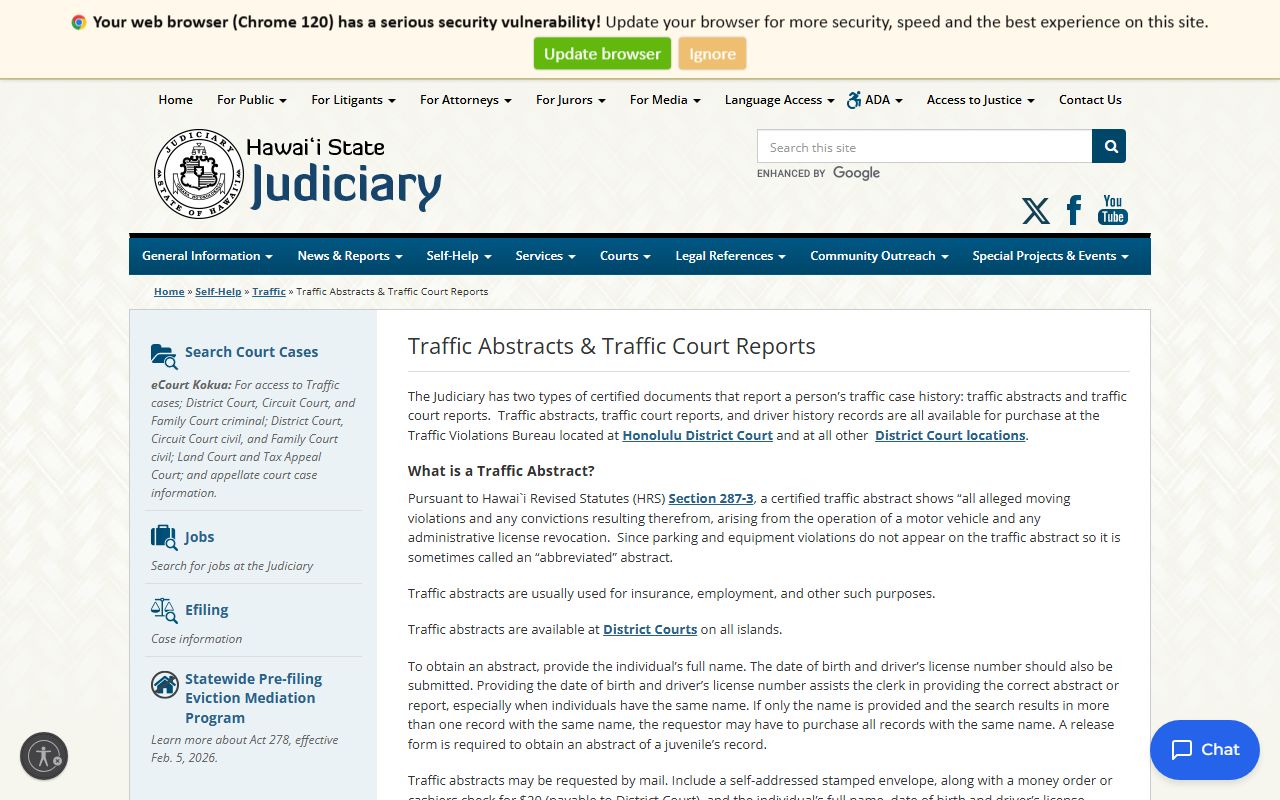
Traffic abstracts are widely used for insurance verification, licensing actions, and other situations where an official driving record is required.
The full text of HRS Section 287-3 is available through Justia and covers exactly what must appear in a certified traffic abstract and who may request one.
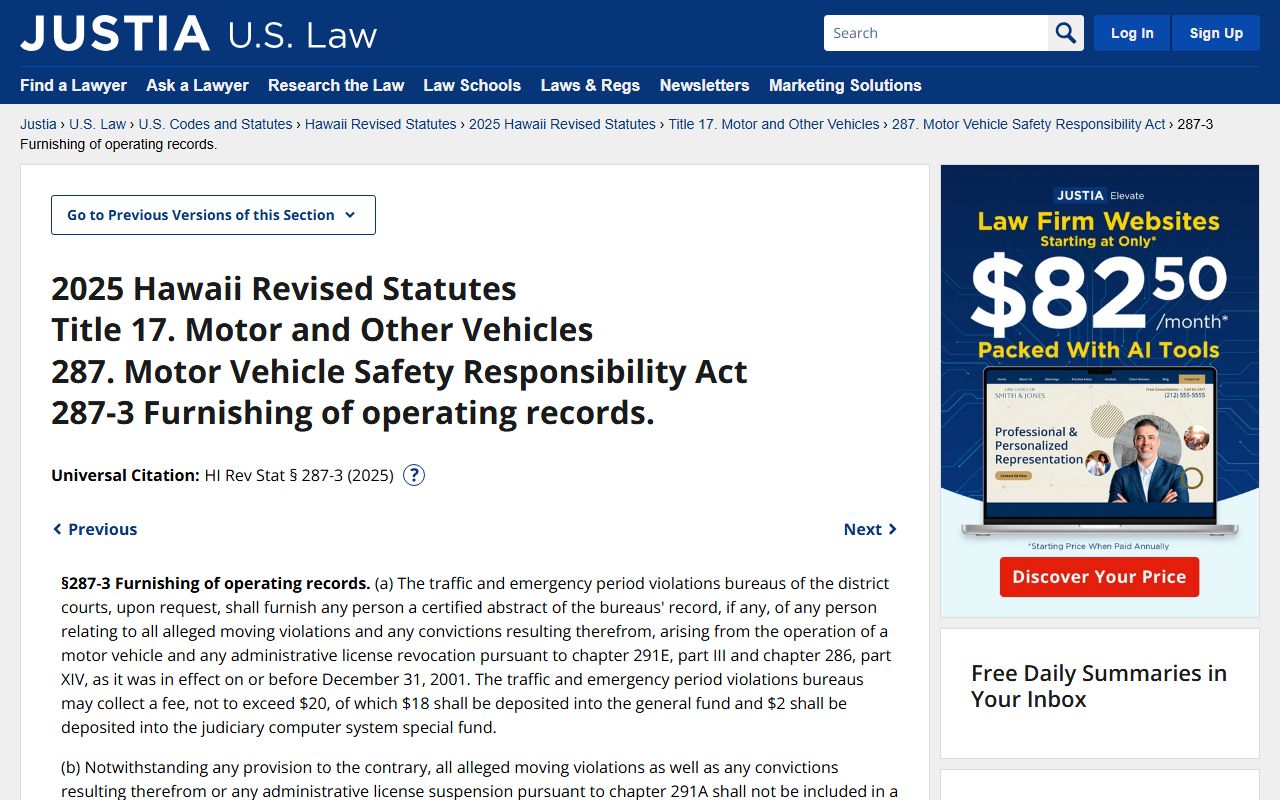
The statute makes abstracts available to any person upon request and does not restrict access based on the reason for the request.
The Traffic Infraction System Under HRS Chapter 291D
Hawaii traffic infractions are processed under Hawaii Revised Statutes Chapter 291D, which the legislature created in 1978 to move traffic cases through the court system faster and at lower cost. The chapter eliminates lengthy arraignment proceedings for most traffic matters and lets defendants resolve cases through payment rather than court appearances. Contested cases are handled through hearings that function more like small claims proceedings, where formal rules of evidence do not apply. This saves time for courts, officers, and drivers alike. No jail term is possible under this chapter. Traffic infractions are not classified as crimes under Hawaii law.
Under HRS Section 291D-6, a person who receives a traffic citation must respond within 21 calendar days. You can admit the infraction and pay, deny it and request a hearing, or admit it with an explanation of mitigating circumstances. Failing to respond leads to a default judgment. That judgment can then result in a hold on your driver's license renewal or vehicle registration. HRS Section 291D-4 sets venue in the district and circuit where the alleged infraction occurred, so the case is handled locally.
The full statutory text of HRS Chapter 291D is available on Justia, covering everything from how citations are issued through default judgments and the appeals process.
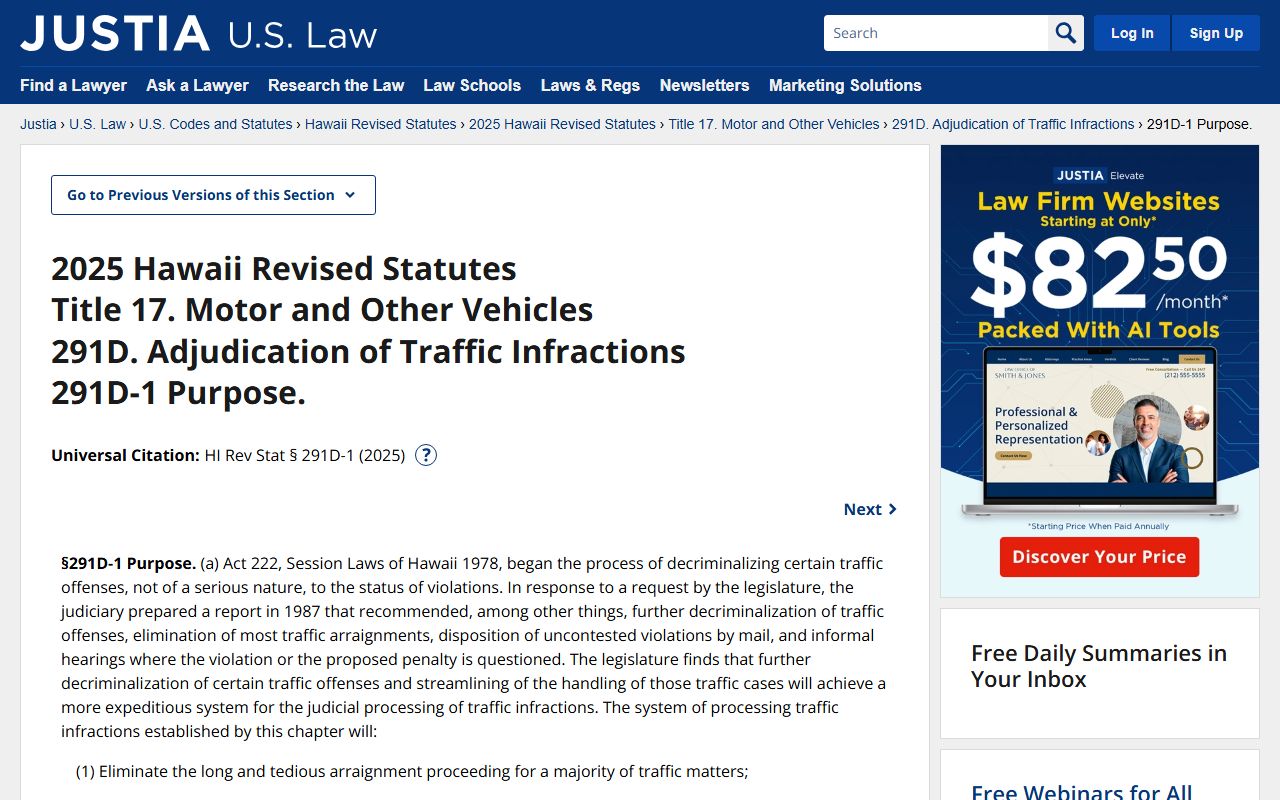
The chapter applies uniformly throughout the state and in all counties, so the same basic rules govern traffic infractions whether the citation was issued in Honolulu or Hilo.
Reading Hawaii Traffic Case Records in eCourt Kokua
eCourt Kokua uses several terms and codes that can be hard to read if you are not familiar with them. The case status field tells you where a case stands right now. ACTIVE means the case is open and further action is pending. INACTIVE means the case is pending but the court cannot move forward until something happens, such as a defendant who failed to appear and had a bench warrant issued. CLOSEDJ or ADJUDICATED means the case is closed because it was dismissed or a judgment was entered. CLOSEDS means the judgment was fully satisfied and the case is done.
Every party in the system has a JIMS ID, which stands for Judiciary Information Management System. This number links a name to case history throughout the database. The docket is a running list of every action taken in a case, including documents filed and what happened at hearings. Older records may contain TRAVIS codes. TRAVIS was the traffic case management system used until October 28, 2005. Records from 1995 through 2005 were migrated from TRAVIS into JIMS. Those older entries still show TRAVIS codes for events, sentence types, dispositions, financial transactions, and staff comments. This is normal and not a sign of an error in the record.
Juvenile traffic records are confidential and not available through eCourt Kokua. A parent or guardian must request a juvenile's traffic abstract in person at a District Court. Once a juvenile becomes an adult, they can request their own records. The system removes personal identifiers such as Social Security numbers, home addresses, birth dates, and home phone numbers from what is displayed online.
The eCourt Kokua FAQ page answers the most common questions about how to read case status codes, JIMS IDs, TRAVIS entries, and docket information found in Hawaii traffic court records.
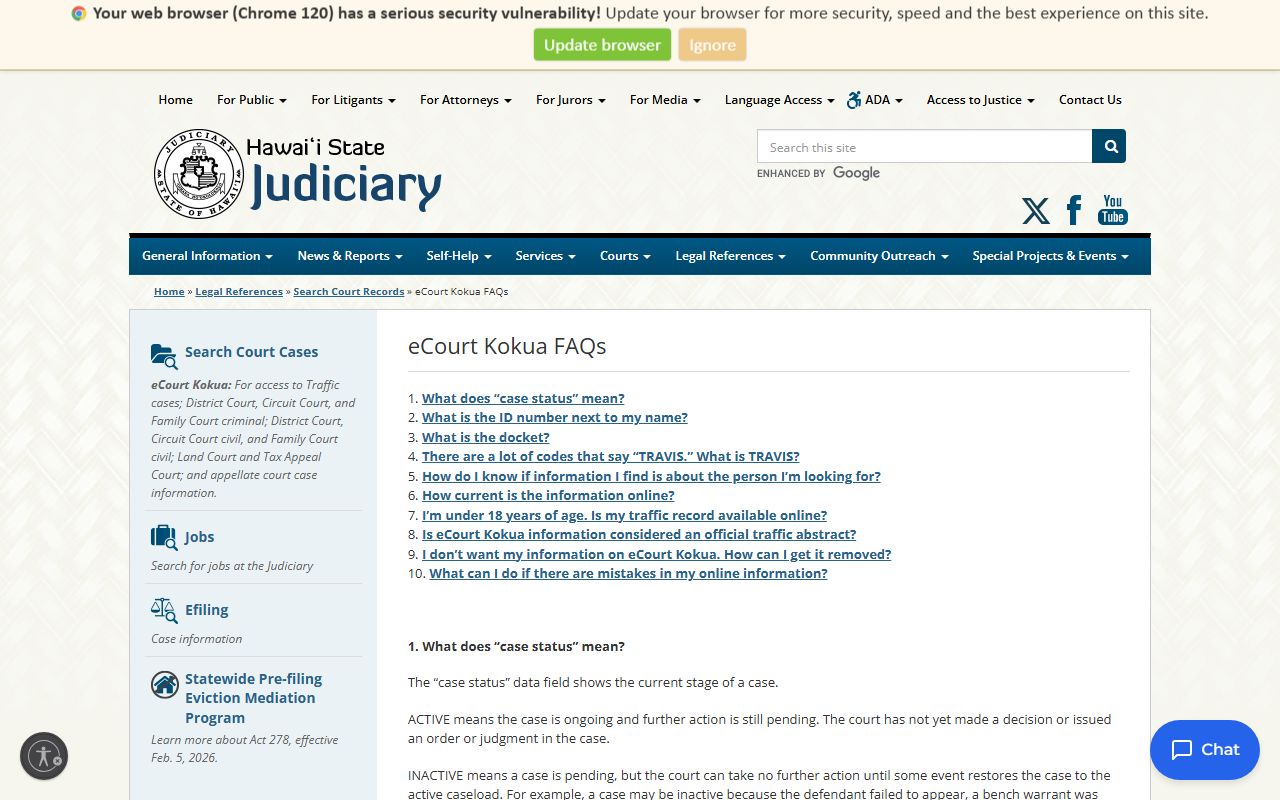
The FAQ also covers how to handle name searches that return too many results and what steps to take when a record appears incorrect.
Legal Navigator Hawaii has a dedicated resource page for eCourt Kokua that explains the system in plain language and walks through the different search options available to the public.
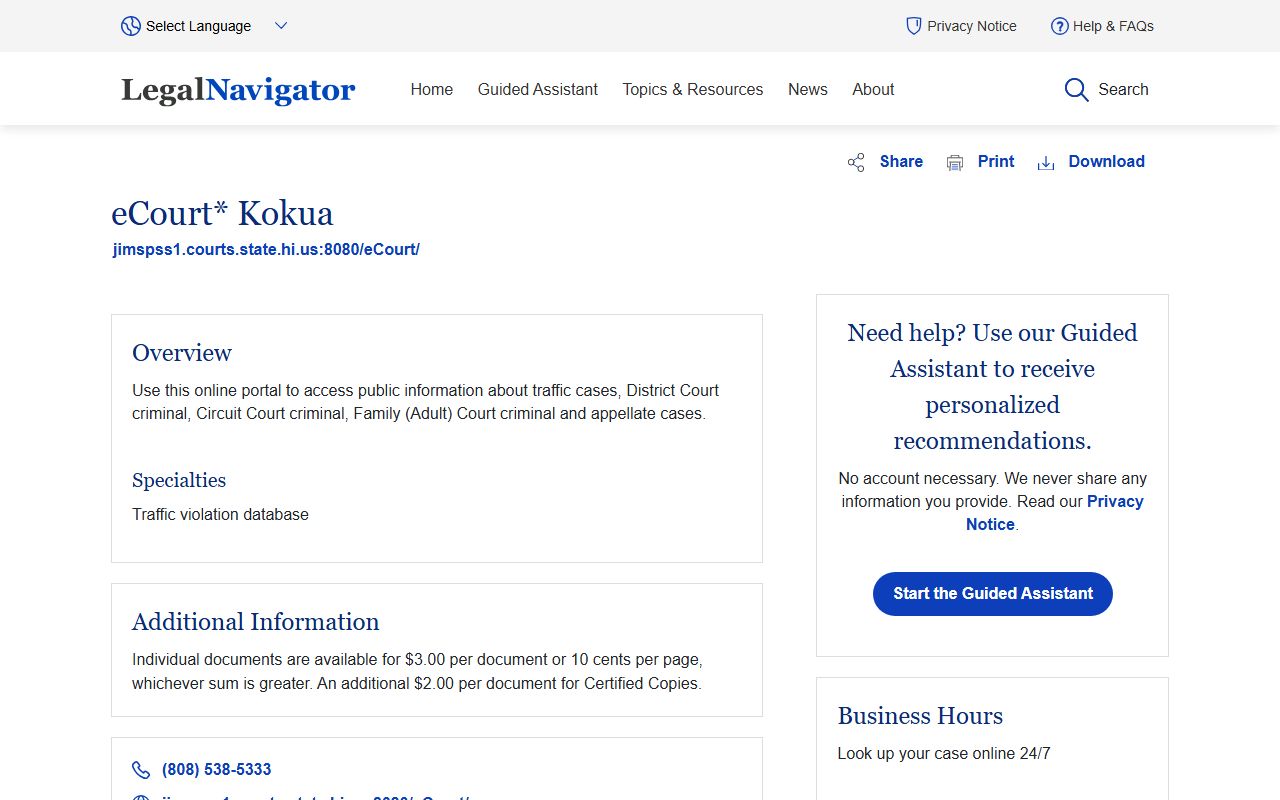
Legal Navigator Hawaii is a useful resource for anyone trying to understand the court system or get help navigating records and filings.
Paying Hawaii Traffic Citations
Hawaii gives you four ways to respond to a traffic citation. Online payment through eTraffic Hawaii at etraffic.ehawaii.gov is the fastest option for citations you plan to admit and pay. The system accepts Visa, Mastercard, Discover, and American Express. A processing fee is added to each transaction. The site is available Monday through Saturday from 3 a.m. to midnight, and Sunday from noon to midnight Hawaii Standard Time. You need your citation number and license plate number. Do not use this system if you plan to contest the ticket or explain your situation to a judge. If a technical error occurs, wait 24 hours before trying again to avoid a double charge.
Phone payment is the second option. Call (800) 679-5949 within 21 days of receiving the citation with your citation number and a Visa or Mastercard ready. This option closes after the 21-day window. In-person payment is accepted at any District Court in Hawaii using a credit card, check, or money order payable to "DISTRICT COURT." Mail payment is the fourth option. Use the pre-addressed envelope provided with your citation. Send a money order or cashier's check. Personal checks are accepted for mail payments at some courts. A $25 service charge applies to any returned payment. For citations that require a court appearance, none of these pay-and-go options apply.
The traffic cases information page on the state judiciary website covers all four payment paths, the 21-day deadline, and what happens if you miss it.
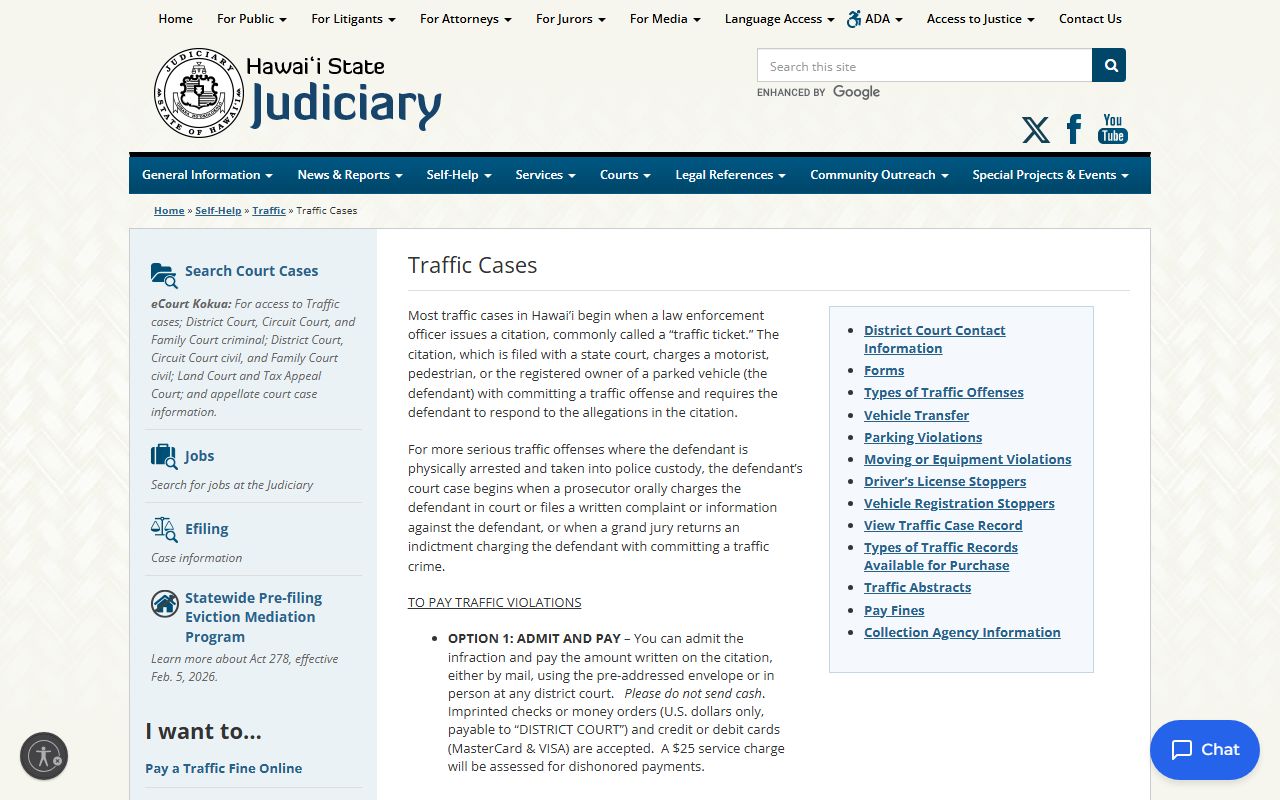
It also explains how cases start for serious violations where the defendant is physically arrested rather than simply issued a citation.
Moving Violations vs Equipment Violations in Hawaii
Hawaii law draws a clear line between moving violations and equipment violations, and the difference affects what shows up on your traffic record. A moving violation involves traffic movement and control arising from operating a motor vehicle. Speeding, running a stop sign, crossing a solid line, and failing to yield are examples. Under HRS Section 287-3, all alleged moving violations must appear on a person's certified traffic abstract. An equipment violation involves a physical problem with the vehicle, such as a missing front license plate, no current safety check sticker, or an expired registration decal. Equipment violations do not appear on the standard traffic abstract but do show up on a traffic court report, which is the complete version.
Both types can be civil infractions or traffic crimes depending on the specific violation and the circumstances. The distinction between moving and equipment matters most when someone is checking your driving record for insurance or other official purposes. Your abstract will show moving violations. It will not show equipment tickets unless you specifically request the complete traffic court report.
The moving and equipment violations page on the judiciary website explains the classification in detail and describes how these violations are reported to state and federal driver databases.
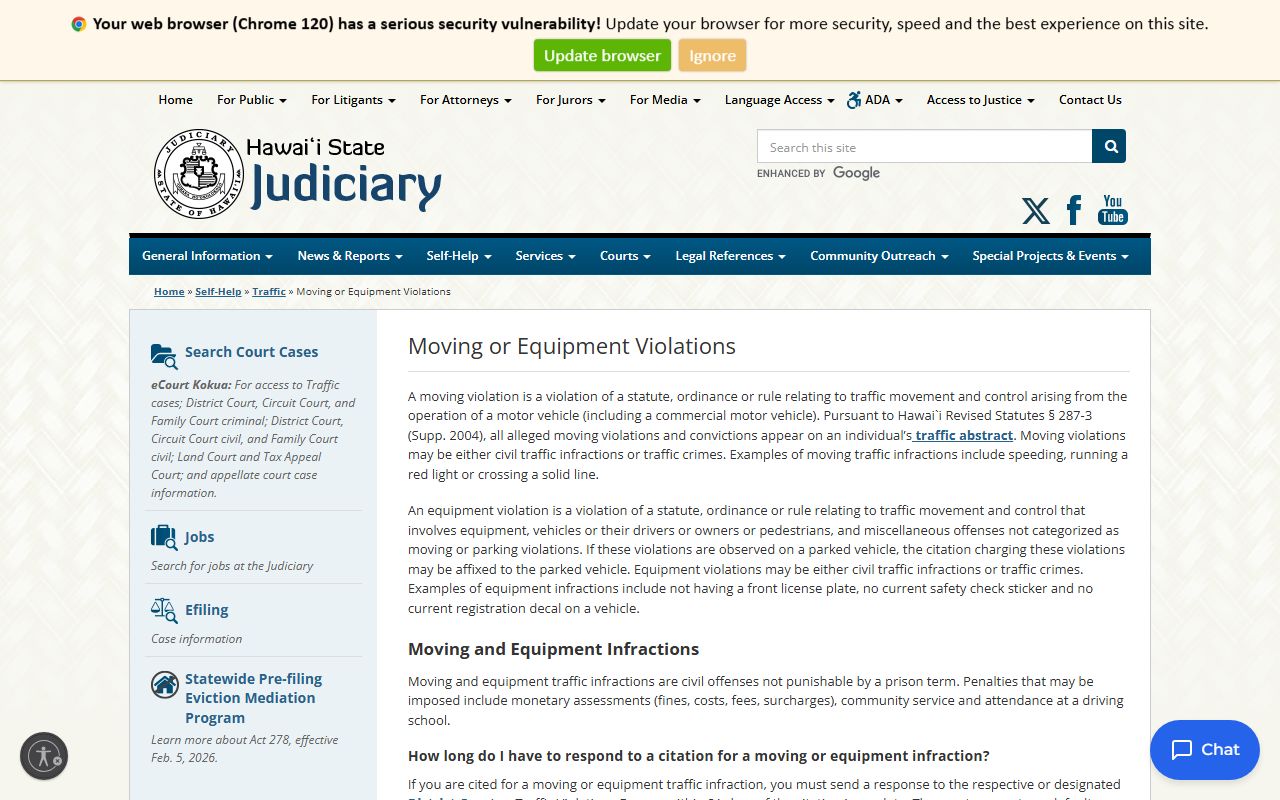
Knowing this distinction helps you understand why a citation you received might or might not appear on a driving record check.
Hawaii District Court Locations for Traffic Cases
Traffic violations in Hawaii are handled by District Courts in four judicial circuits. Office hours at all locations are 7:45 a.m. to 4:30 p.m., Monday through Friday, except state holidays. Counter hours for traffic matters are 8 a.m. to 1 p.m. The District Court contact information page provides current addresses and phone numbers for every Traffic Violations Bureau location in the state.
The First Circuit covers Oahu and has five locations. The main Traffic Violations Bureau is at Kauikeaouli Hale, 1111 Alakea Street, Honolulu, phone (808) 538-5500. The Ewa-Pearl City Division at 870 Fourth Street, Pearl City handles west and central Oahu at (808) 534-6900. Kaneohe Division at Abner Paki Hale, 45-939 Pookela Street serves windward communities at (808) 534-6300. Wahiawa Division at 1034 Kilani Avenue covers central Oahu and the North Shore at (808) 534-6200. The Waianae Division at the Kapolei Judiciary Complex, 4675 Kapolei Parkway handles west Oahu at (808) 954-8575.
The Second Circuit covers Maui, Molokai, and Lanai. The Traffic Violations Bureau is at Hoapili Hale, 2145 Main Street, Wailuku, phone (808) 244-2800. Lahaina District Court at 1870 Honoapiilani Highway serves west Maui. Smaller courts in Hana, Lanai City, and Kaunakakai serve their respective communities. The Third Circuit handles Hawaii Island, with the main courthouse Hale Kaulike at 777 Kilauea Avenue, Hilo, phone (808) 961-7470, and a west side location at Keahuolu Courthouse, 74-5451 Kamakaeha Avenue, Kailua-Kona, phone (808) 322-8700. The Fifth Circuit serves Kauai at Puuhonua Kaulike, 3970 Kaana Street, Lihue, phone (808) 482-2355.
The District Court contact information page is the best place to confirm current hours, addresses, and what each courthouse handles before you make the trip.
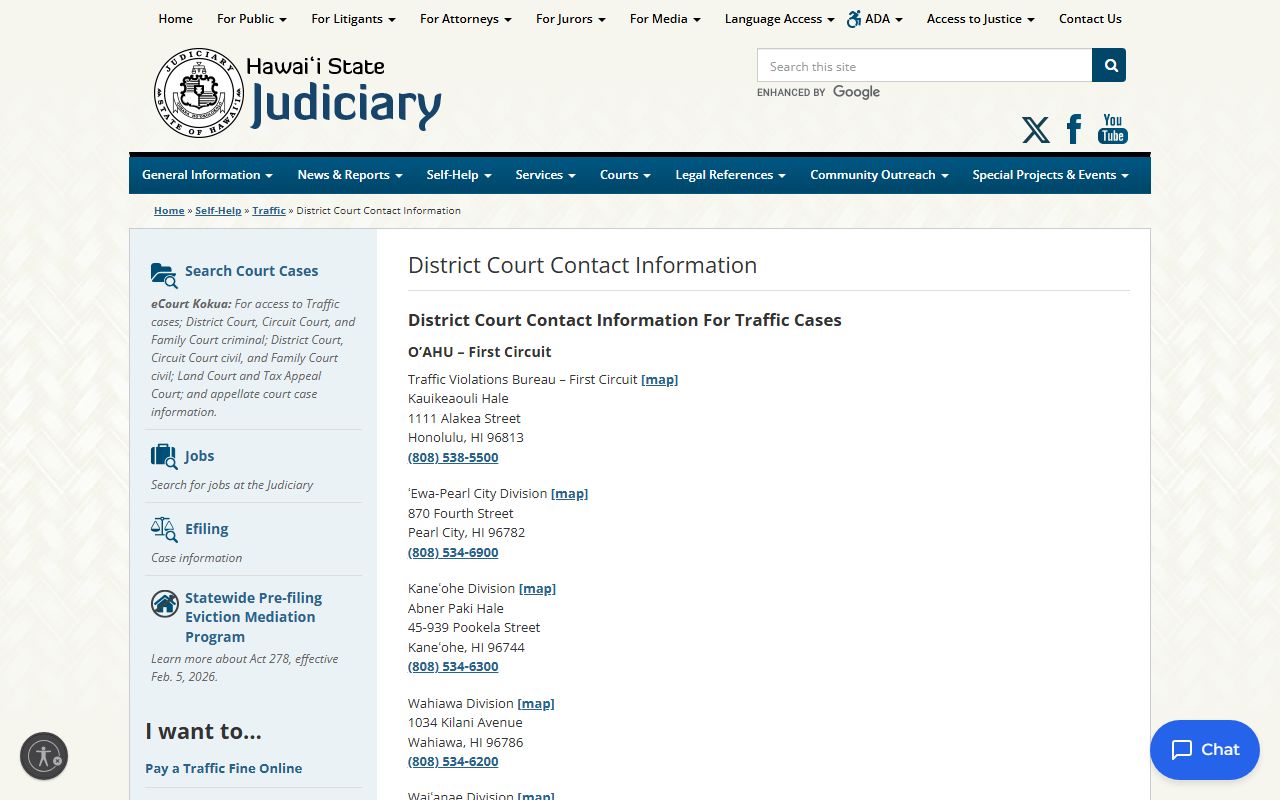
All District Courts accept in-person payments, abstract requests, and record lookups during their counter hours.
Hawaii Driver History Records from the DOT
The Hawaii Department of Transportation issues Driver History Records (DHR) separately from the court system's traffic abstracts. The fee for a DHR is $9. You can get one by visiting any District Court location or writing to one of the court addresses. For commercial vehicle drivers, the DHR tracks CDL disqualifying conviction types as defined by federal motor carrier safety rules. For regular drivers, the record shows citations and preliminary conviction data. Worth noting: the DHR may not always reflect the final outcome of a case. If a conviction was later overturned, a traffic abstract or traffic court report from the court is the document that would show that. For questions, call the Hawaii Department of Transportation at (808) 692-7656.
County driver licensing offices handle questions about suspensions, revocations, or disqualifications. These offices are separate from the courts. Honolulu Driver Licensing is at (808) 768-9100. Hawaii Island Driver Licensing is at (808) 961-2222. Kauai Driver Licensing is at (808) 241-4242. Maui Driver Licensing handles inquiries at (808) 270-7363. These offices deal with license status issues, not court case records.
The Hawaii DOT driver history record page explains the request process, defines the terms used in the record, and describes how it differs from a traffic abstract issued through the courts.
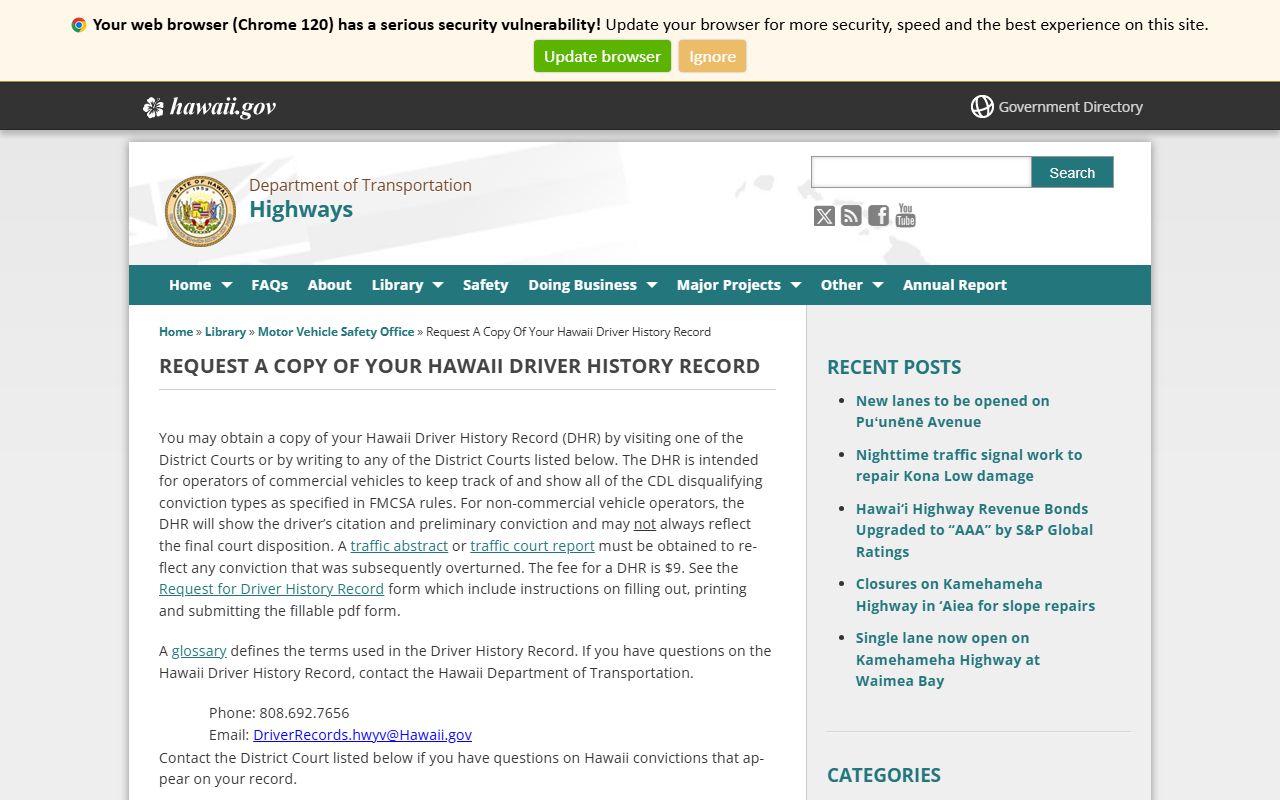
Knowing which document you actually need saves time, since the court abstract and the DOT record serve different purposes and go through different offices.
Browse Hawaii Traffic Records by County
Hawaii has five counties, each served by a specific judicial circuit and set of District Courts. Select a county below to find court locations, contact information, and local resources for traffic court records.
Traffic Court Records in Major Hawaii Cities
Select a city below to find the District Court that handles traffic cases for that area, along with courthouse contact details and local resources.